
A shared meal can look like a small part of the working day. In reality, it can create something many businesses are actively trying to rebuild, the time for people to connect without an agenda. As hybrid working changes when and why teams come together, workplace food can play an important role, not as a perk, but as a natural point of connection
Great workplace catering should do more than provide food. It should enhance the working day. Planned well, it can support collaboration, make meetings feel better considered, welcome clients, recognise teams and take pressure away from the people organising the day. That is the wider value food can create.
Why shared food matters in a hybrid workplace
The office is no longer simply the place where work happens. For many organisations, it is where people come together for conversations, decisions, learning and relationships that are harder to recreate remotely. This makes the quality of the shared workplace experience increasingly important.
UK research continues to show tension between employers’ desire for more office presence and employees’ preference for flexibility. CIPD has advised organisations to take a balanced approach to return-to-office policies, while hybrid-working research shows that employees still place significant value on choice and purposeful office time.¹ ² Food cannot solve that tension on its own, but it can make an office day feel more intentional, welcoming and socially valuable.
The 2025 World Happiness Report found a strong relationship between sharing meals, social connection and wellbeing. Separate organisational research has also linked eating together with stronger team performance and informal communication.³ ⁴ These findings reflect something workplaces see every day: people often talk differently over food than they do in a scheduled meeting.
WHY THIS MATTERS
Food creates a pause in the working day. That pause gives people permission to step away from their screens, speak to colleagues beyond their immediate tasks and build the informal relationships that help teams work well together.
Five ways workplace catering can create more value
1. It creates a natural reason to come together
A shared breakfast, team lunch or themed food day gives people a focal point without forcing interaction. The most effective formats feel easy and inclusive: food is available within a clear window, the setup encourages people to gather, and nobody needs to attend a formal “networking” session.
2. It helps conversations move beyond the meeting agenda
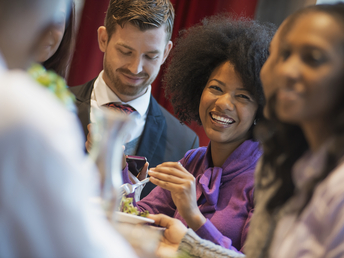
Some of the most useful workplace conversations happen before a meeting starts, while plates are being filled or when people sit beside someone they do not usually work with. Food softens the structure of the day and creates space for questions, ideas and relationships to develop more naturally.
3. It supports culture through repeated moments
One impressive event can create a memorable day, but workplace culture is usually built through repetition. Regular breakfasts or lunches can become part of a team rhythm: a dependable moment to reconnect, welcome new starters, celebrate progress or simply spend time together. Consistency matters, but so does variety. Rotating menus and formats keep recurring catering from feeling routine.
4. It improves the experience of meetings and client hospitality
Food affects how a meeting feels. Thoughtful timing, clear dietary choices and food that is easy to serve allow the organiser to focus on the people in the room. For client meetings, it also communicates care and preparedness without needing to feel formal or extravagant.
5. It reduces pressure on the people organising the workplace
The value of catering is not only experienced by those eating it. Office Managers, EAs, PAs and Workplace Experience teams carry the detail: headcounts, delivery windows, allergens, setup and last-minute changes. Clear ordering, refrigerated delivery, helpful labelling and real support behind the system can make the whole occasion easier to manage.
How to make shared workplace food work
The best results rarely come from ordering more food. They come from planning the occasion around the people, the space and the outcome you want to create.
Food as a business tool, without overclaiming it
Workplace catering should not be presented as a shortcut to engagement or a substitute for good leadership, flexibility or meaningful work. A lunch will not repair a poor culture. What food can do is support the conditions in which connection happens: it creates shared time, removes a small point of friction and gives people an experience they can participate in together.
That distinction matters. The strongest workplace food programmes are not built around “free lunch” as a benefit in isolation. They are connected to real working patterns, team needs and workplace objectives. Food becomes part of how the organisation welcomes, gathers and looks after people.
The Sands Perspective
Over more than 50 years in food, we have seen the workplace change significantly. What has remained constant is the role food plays in bringing people into the same space. Today, the opportunity is to use that time more thoughtfully, shaping menus, ordering and service around how teams actually work, meet and spend time together.
For some workplaces, that means a regular shared lunch on the busiest office day. For others, it may be a breakfast before an all-hands meeting, food for a client session or a seasonal event. The format can change; the principle remains the same: make it easy for people to come together and easy for organisers to make it happen.
The Value Created
• More natural connection between colleagues
• Better-supported meetings and collaboration days
• A more welcoming and considered workplace experience
• Less administrative pressure for organisers
• Inclusive food occasions that more people can enjoy
• Stronger client and employee hospitality
• Regular moments that help workplace culture feel visible
Planning workplace food?
Whether you are organising workplace breakfasts, team lunches, recurring employee feeding or a larger office event, our team can help shape the right food around your workplace, your people and the occasion.